Open burning of plastic waste is a global crisis — fueling climate change and putting human health at serious risk.
Every day, in regions without proper waste collection, households resort to burning plastic simply to get rid of it. This often happens because packaging isn’t recyclable or safe to dispose of. The result? Toxic air pollution, greenhouse gas emissions, and long-term health damage to communities.
We cannot afford to ignore it.
🌍 Join the International Waste Platform’s global movement to:
Raise awareness about the dangers of open burning
Educate communities and policymakers
Advocate for strong environmental regulations to ban this harmful practice
Together, we can end open burning — and protect both people and planet.
Open Waste Burning & Climate Change
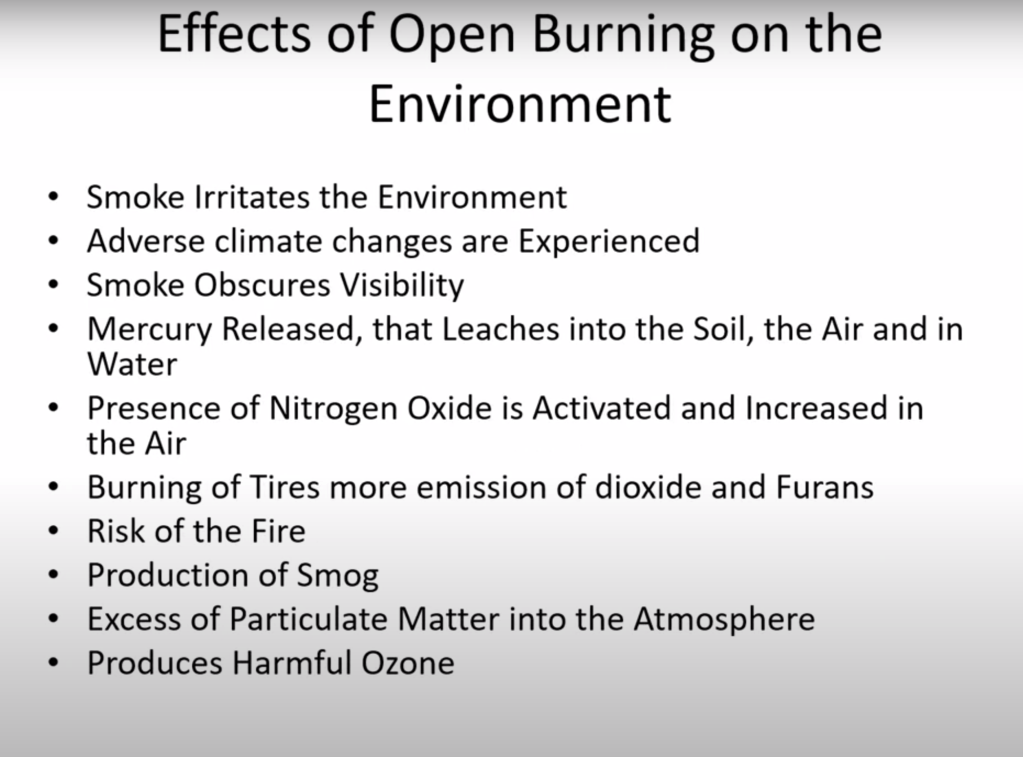
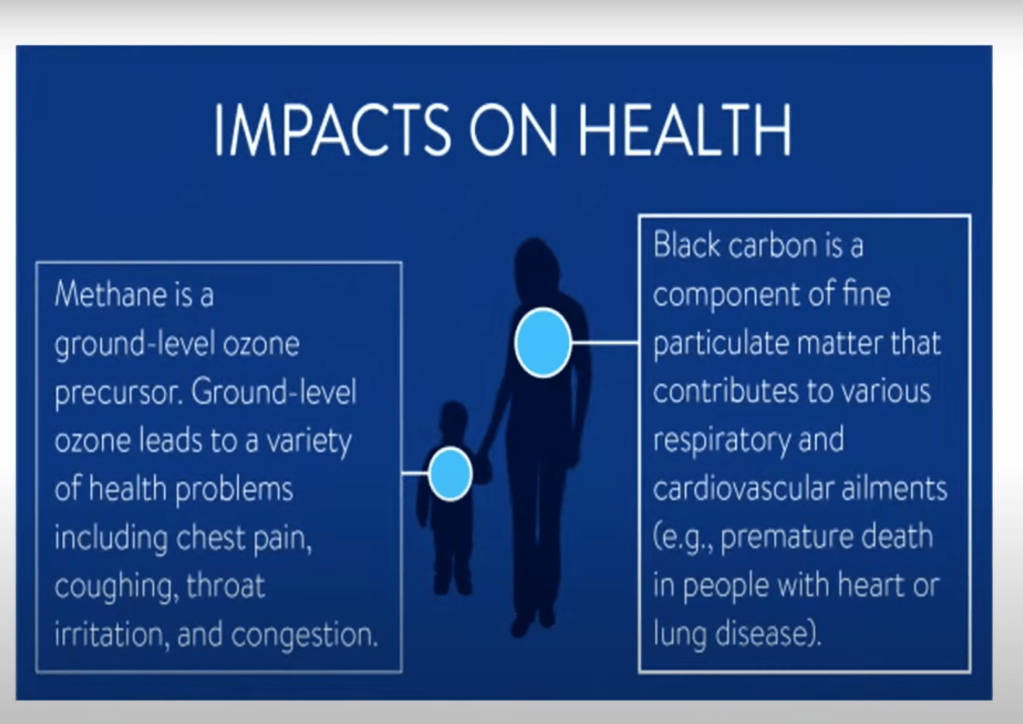
Open burning of waste is a major, yet often overlooked, contributor to the climate crisis. Research shows that black carbon emissions from waste burning may account for 2–10% of global CO₂-equivalent emissions — a staggering impact from an unregulated practice.
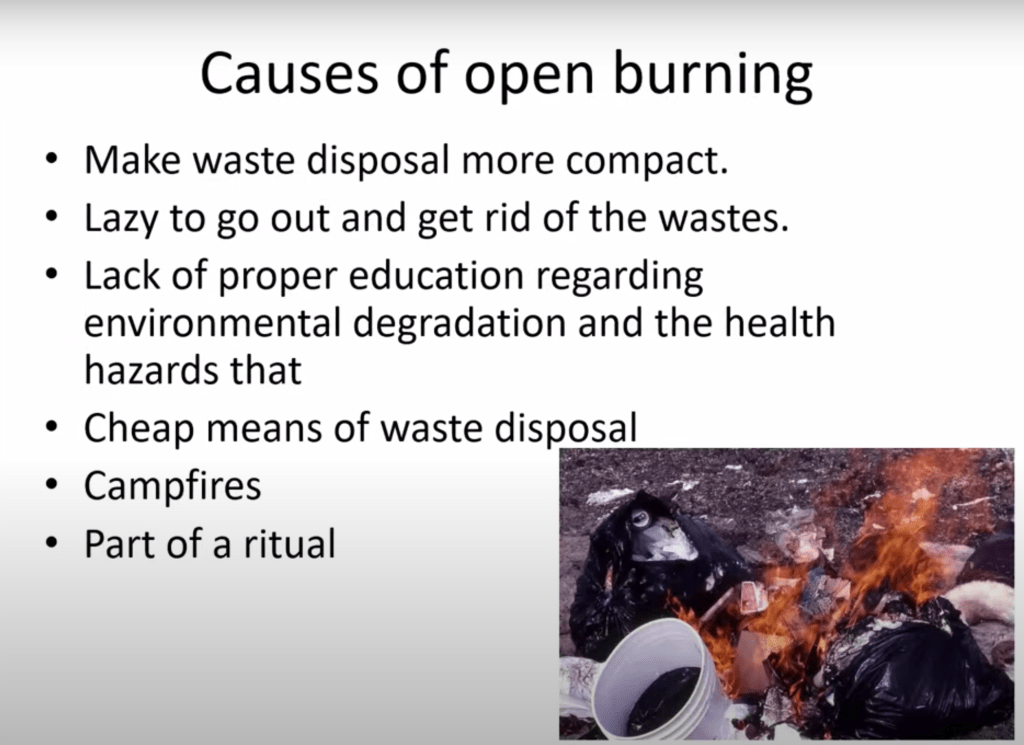
Across many regions, especially where formal waste systems are lacking, burning household waste is a daily routine — often the only available method of disposal. This includes:
🏡 At the household level, where burning is part of routine chores
🗑️ At landfills and illegal dump sites, where waste is burned intentionally to reduce volume
🔥 In spontaneous landfill fires, triggered by methane gas from decomposing organic matter
♻️ Along informal recycling chains, where low-value or non-recyclable plastics and materials are burned to extract valuable components (e.g., from e-waste)
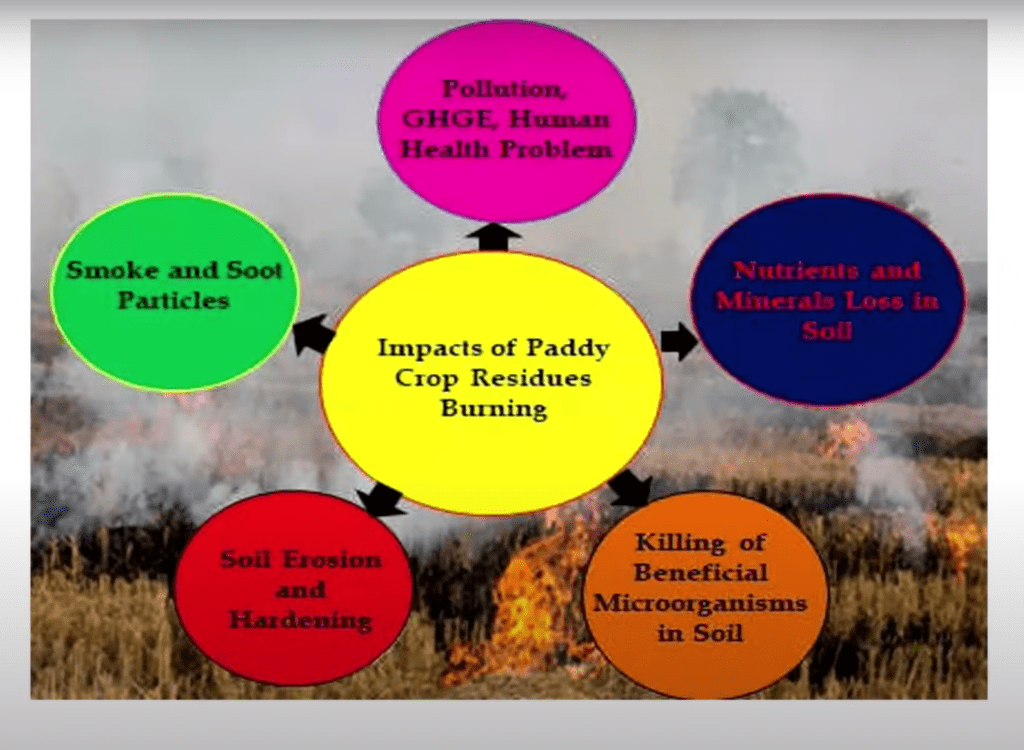
🌾 In agriculture, where burning of rice straw and crop residues releases greenhouse gases and pollutes the air
Whether intentional or accidental, open burning releases toxic pollutants, contributes to global warming, and poses severe health risks to nearby communities.
🌍 It’s time to act. The International Waste Platform is raising awareness, building global momentum, and advocating for strong environmental regulations to ban open burning as a waste management practice.
Join us in turning smoke into change.
🔥 Open Waste Burning & Human Health
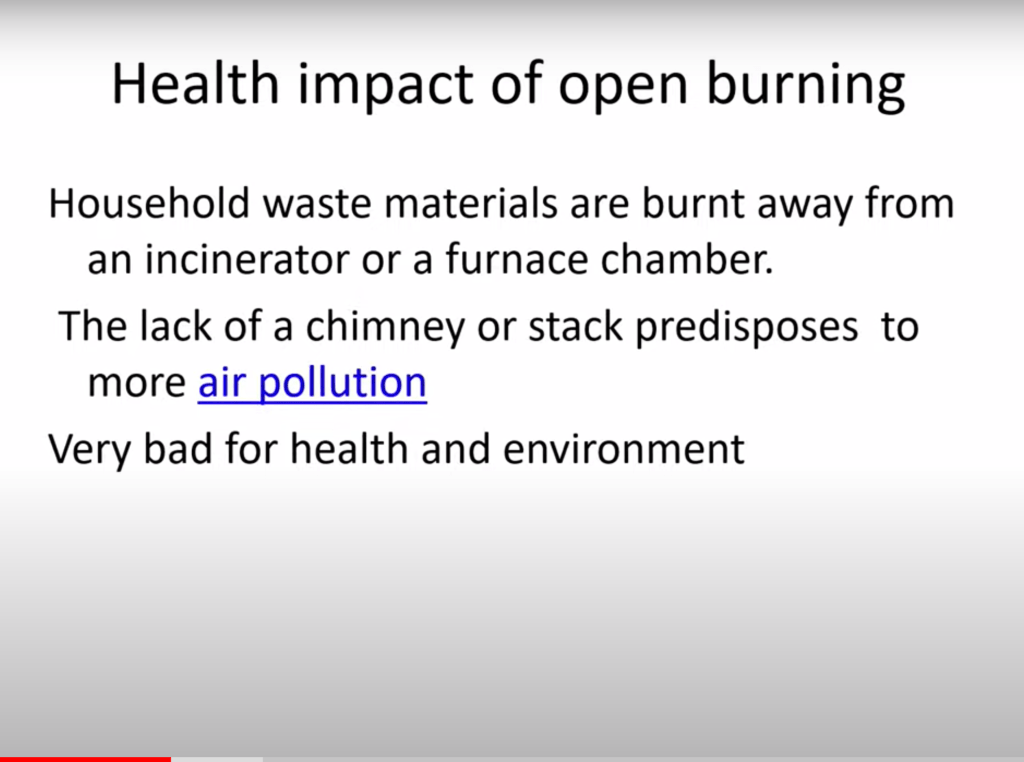
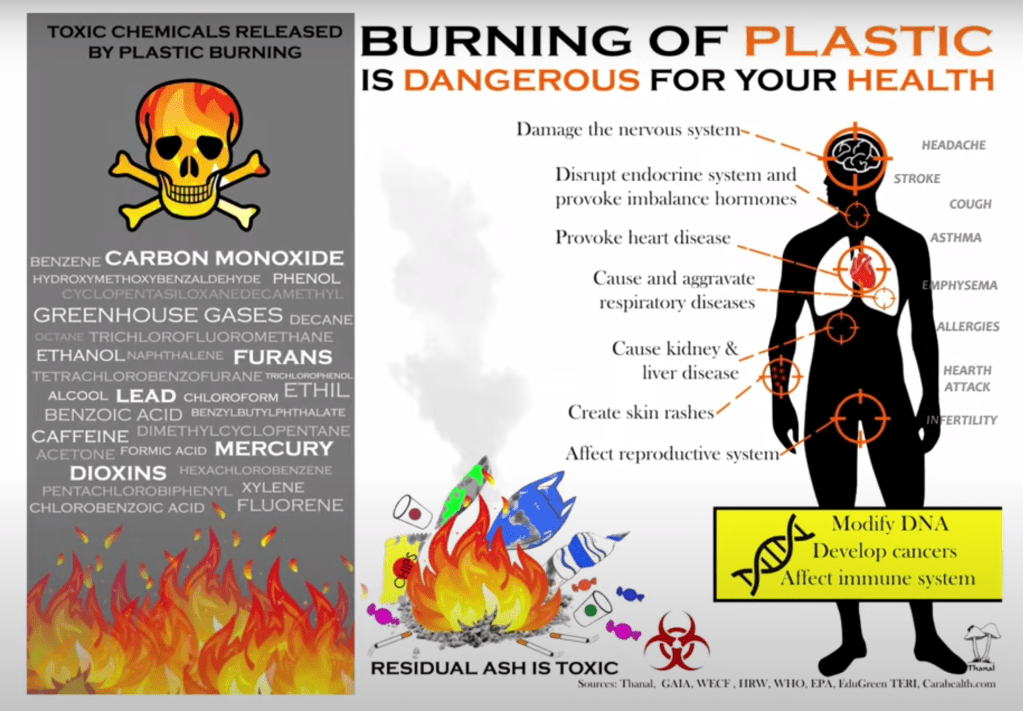
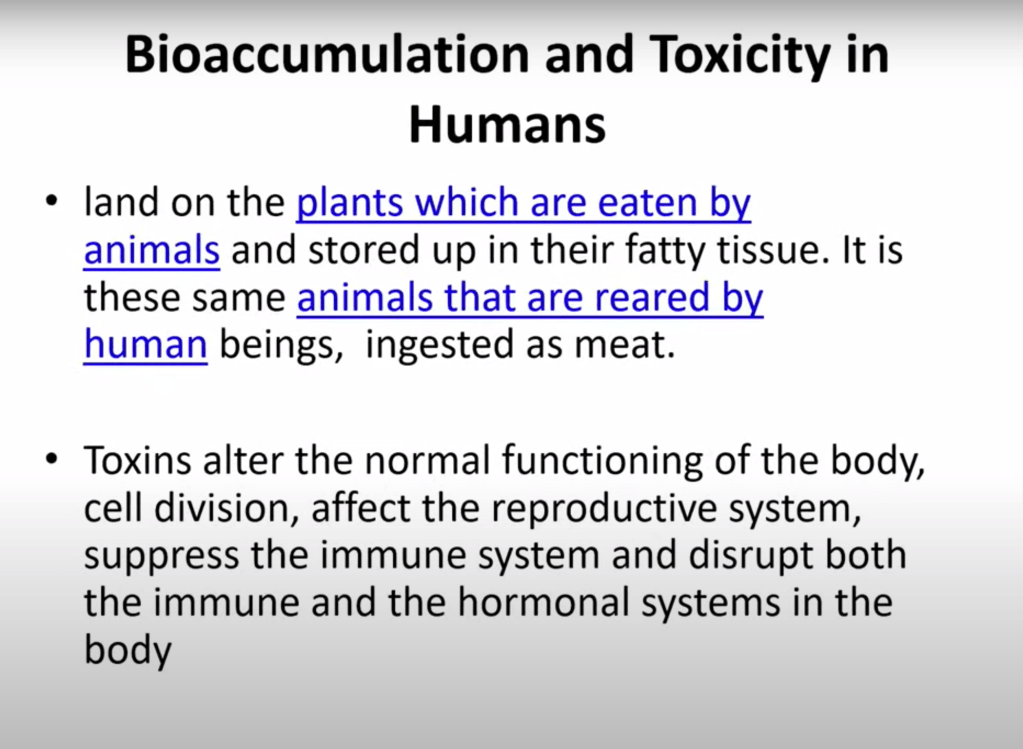
Open-air burning of waste releases a toxic cocktail of pollutants that seriously endanger human health — especially in communities exposed to this practice on a daily basis.
🚨 Key harmful emissions include:
Fine particulate matter (PM2.5) – penetrates deep into lungs and bloodstream
Black carbon (soot) – a potent climate and health hazard
Polyaromatic hydrocarbons (PAHs) – including known carcinogens like benzo(a)pyrene
👶👵 Who’s most at risk?
Young children and older adults
People with respiratory conditions like asthma or COPD
Pregnant women and developing fetuses
💥 Health impacts linked to these toxic exposures include:
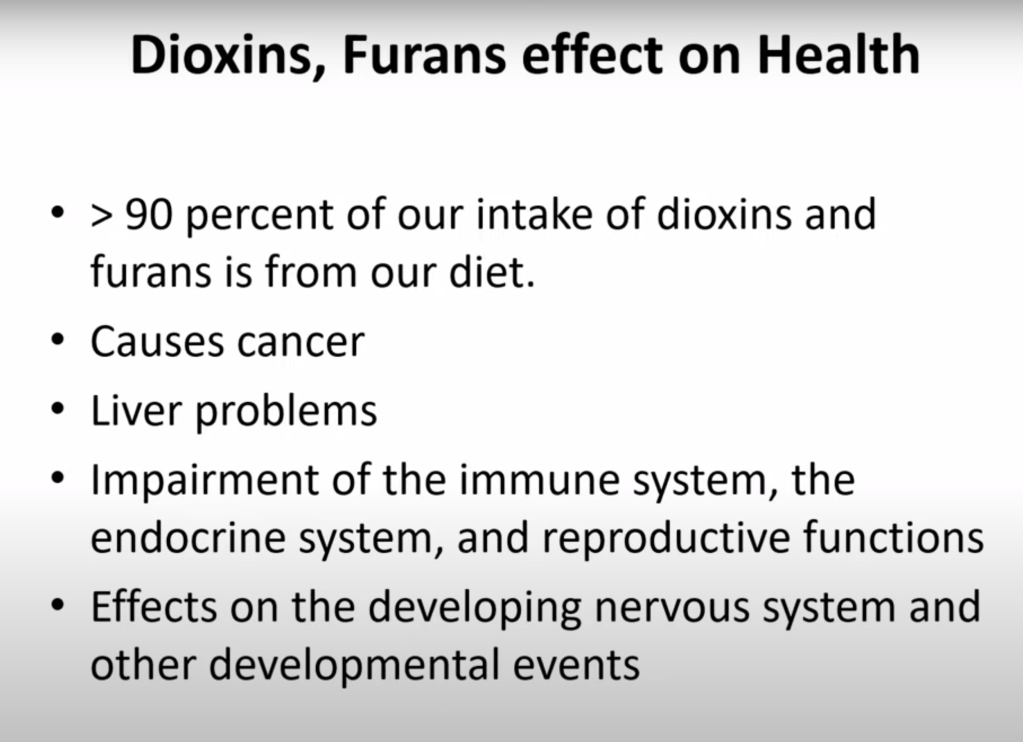
Increased risk of cancer
Damage to the liver, immune system, and reproductive organs
Disruption of the endocrine (hormonal) system
Developmental issues in children
🔥 Open waste burning isn’t just an environmental issue — it’s a public health emergency. Ending this practice is essential to protect the most vulnerable among us.
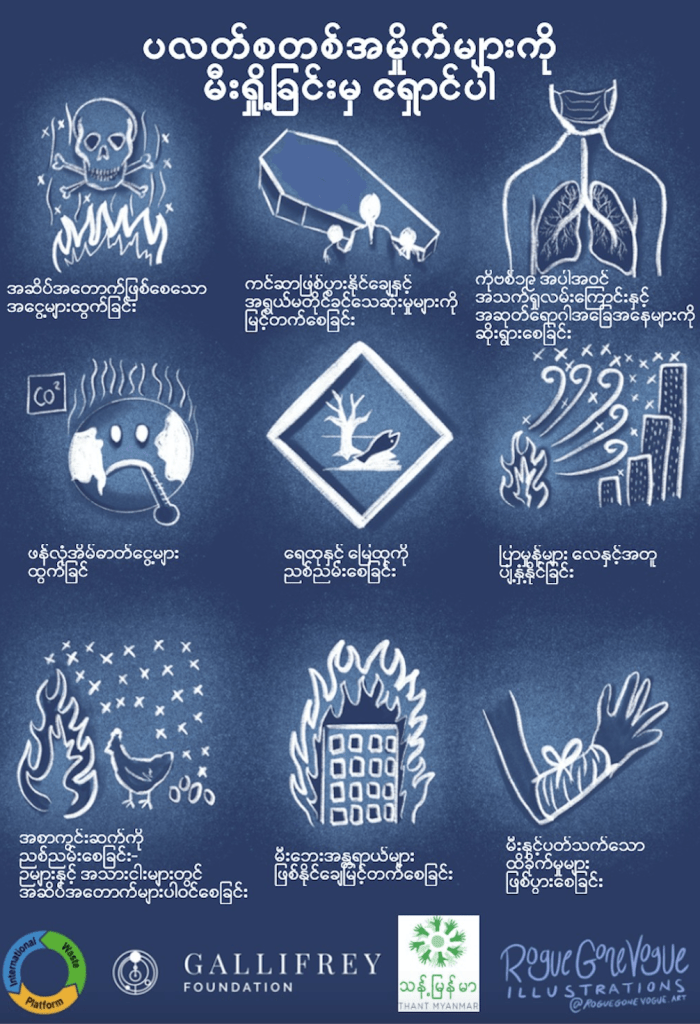
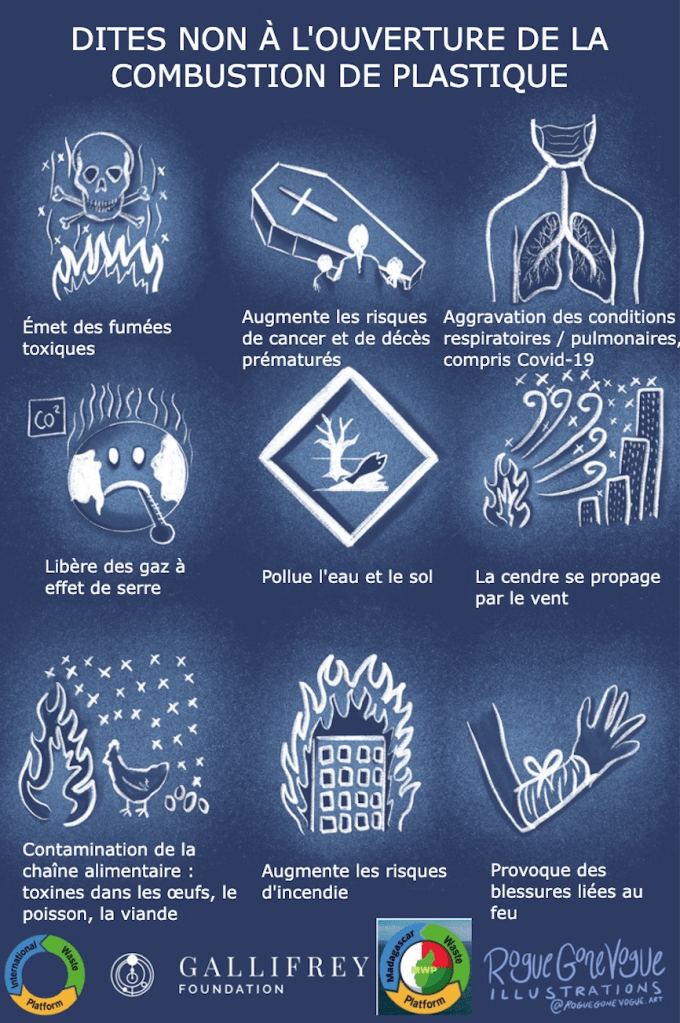
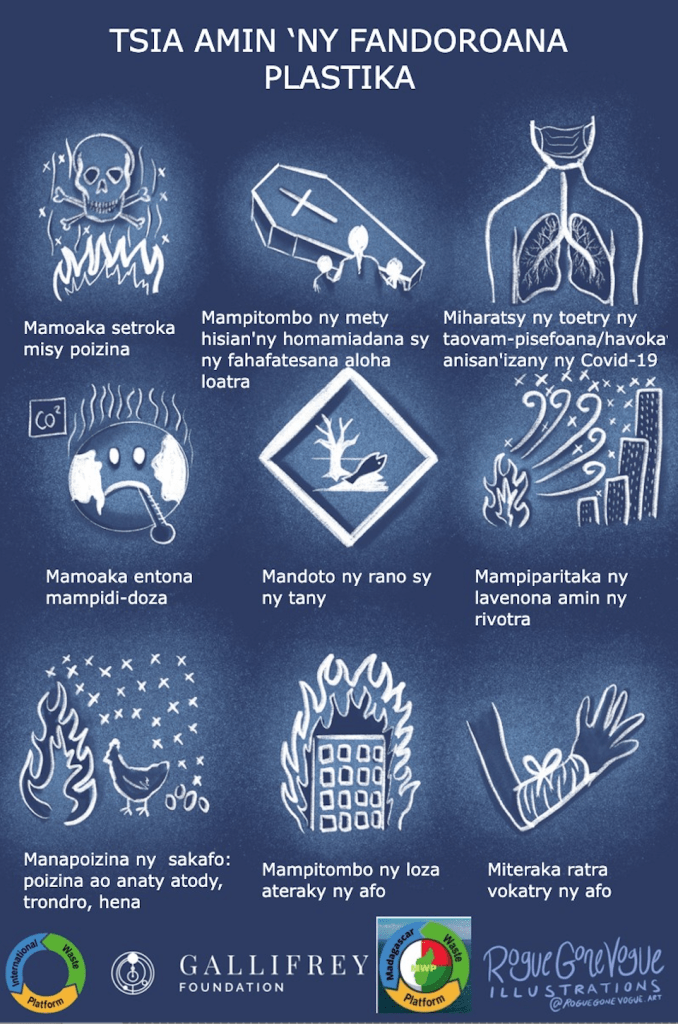
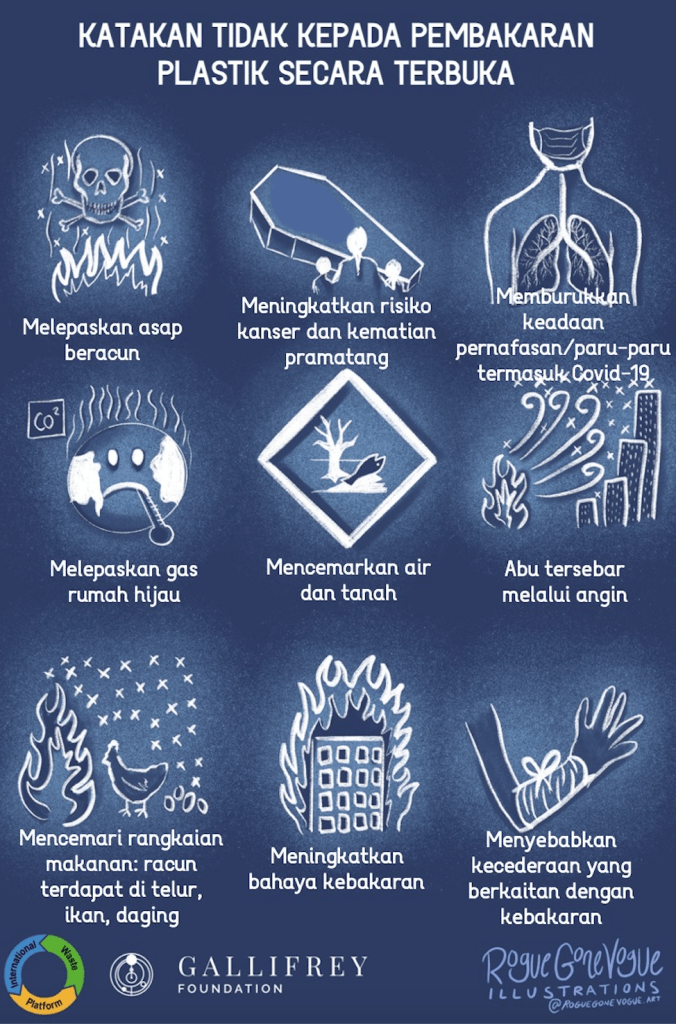
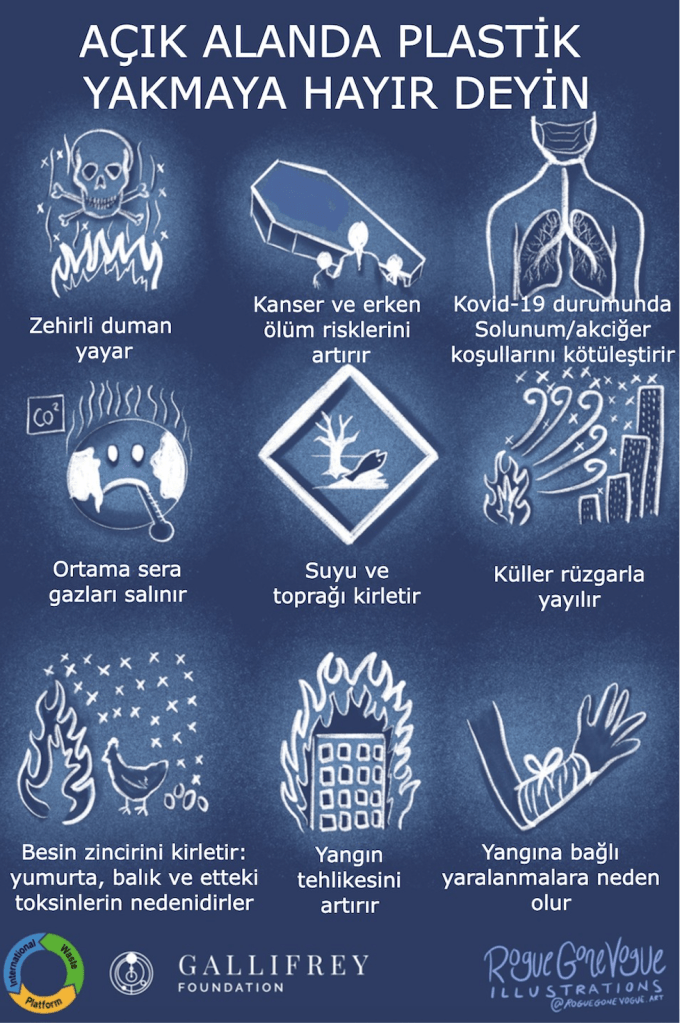
🔥 Campaign posters 🔥
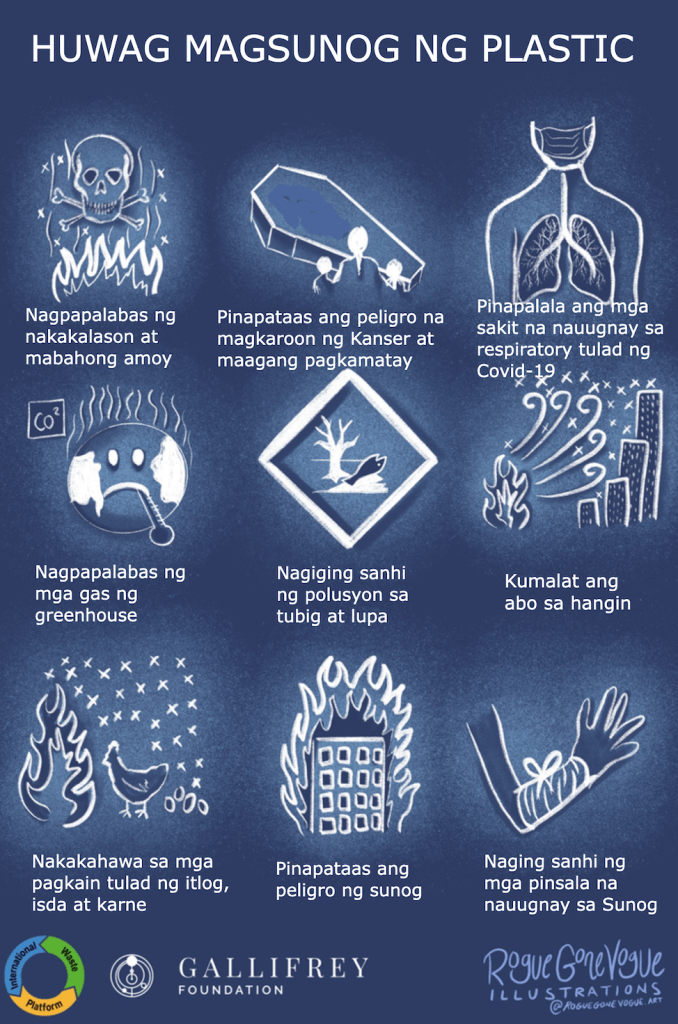
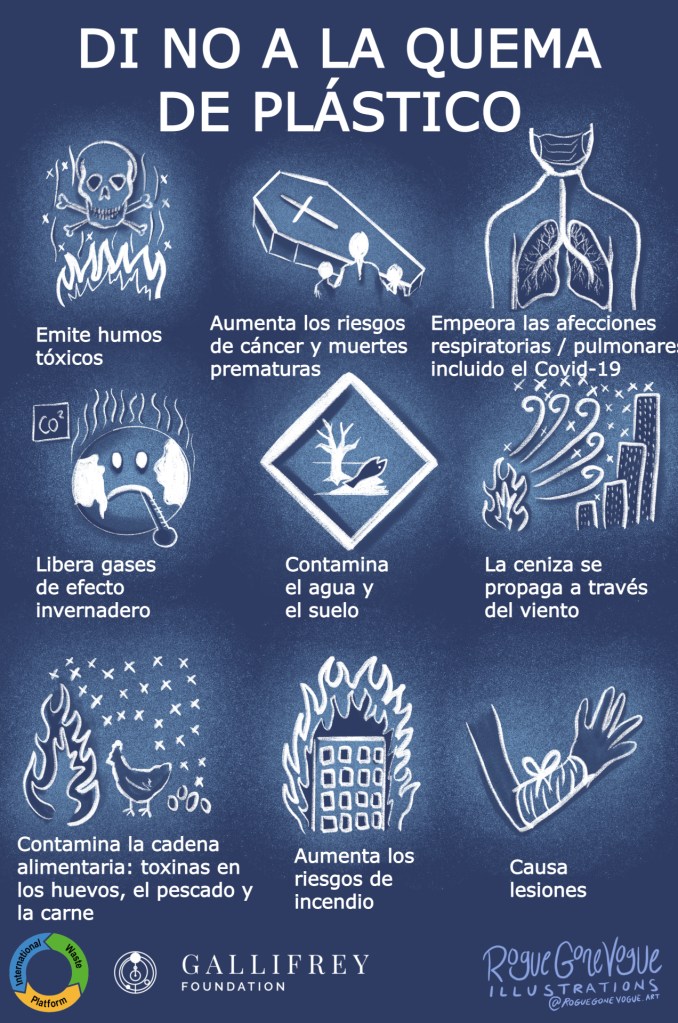
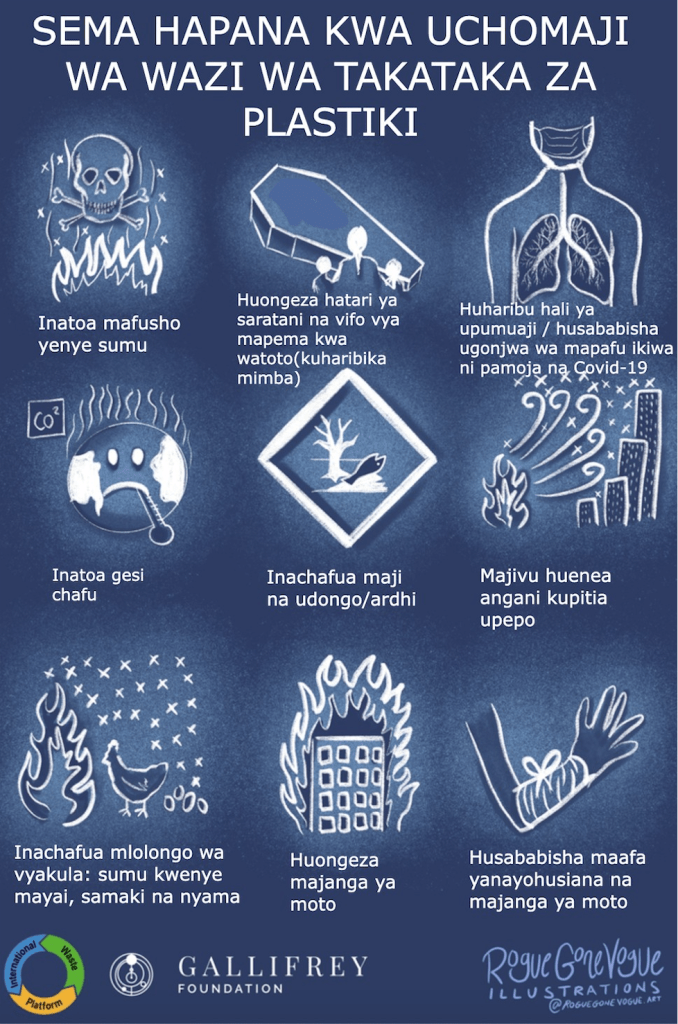
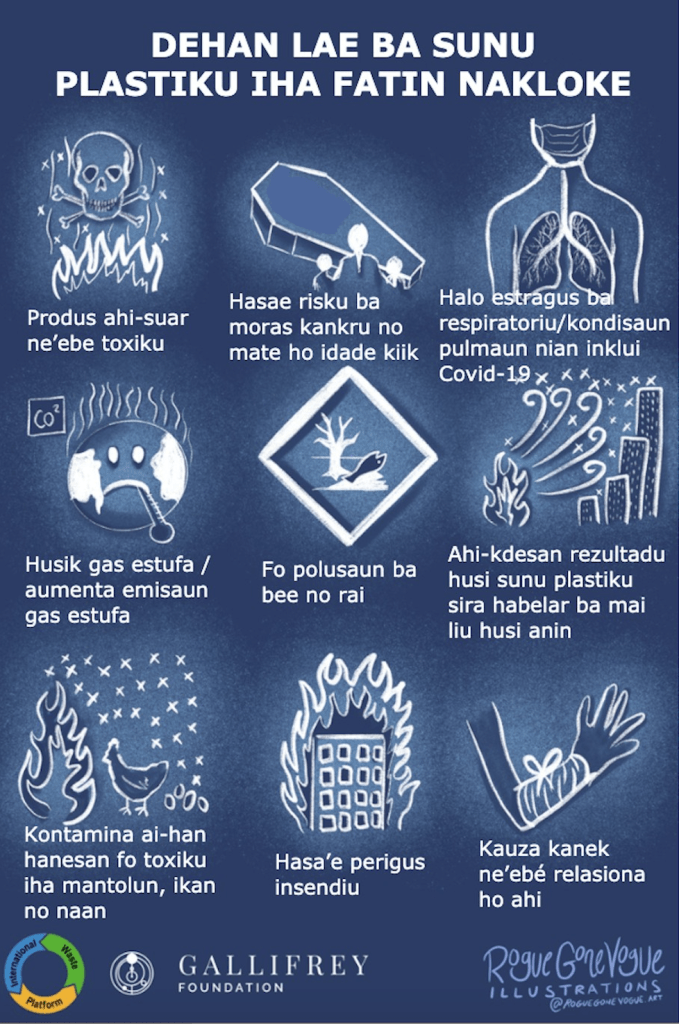
🌍 Now Available in 15+ Languages!
Our campaign posters are available in Burmese, English, Filipino, French, Greek, Hindi, Indonesian, Korean, Malagasy, Malay, Portuguese, Spanish (Castellano), Swahili, Tetum, and Turkish.
We warmly invite you — as an individual, organisation, business, or government body — to join our global movement by sharing this poster within your community.
✅ Download it free of charge in your preferred language and use it in your network, campaign, school, or local outreach.
🌐 Is your national language not listed yet? No problem — we’re happy to provide a translated version for your country. Just get in touch!
Let’s raise awareness together, across languages and borders.
Plastic pollution and the open burning of plastic wastes – Gauri Pathak, Mark Nichter, Anita Hardon, Eileen Moyer, Aarti Latkar, Joseph Simbaya, Diana Pakasi, Efenita Taqueban, Jessica Love. Global Environmental Change, Volume 80, 2023, 102648, ISSN 0959-3780, Abstract: The open burning of plastic wastes is a practice that is highly prevalent across the globe, toxic to human and environmental health, and a critical—but often overlooked—aspect of plastic pollution. Most of the countries where such burning is widespread have laws and policies in place against it; open burning continues nevertheless. In this article, using data from ethnographic fieldwork in urban and rural sites in India, Indonesia, the Philippines, and Zambia, we examine local practices of open burning and investigate why regulations to tackle it have proven largely ineffective. Adopting a harm reduction approach, we then suggest preliminary measures to mitigate the health risks of open burning by targeting those plastics and packaging types that are most toxic when burned. Keywords: Plastic pollution; Open burning of wastes; Plastic wastes; Toxicity; Public health












 International Waste Platform